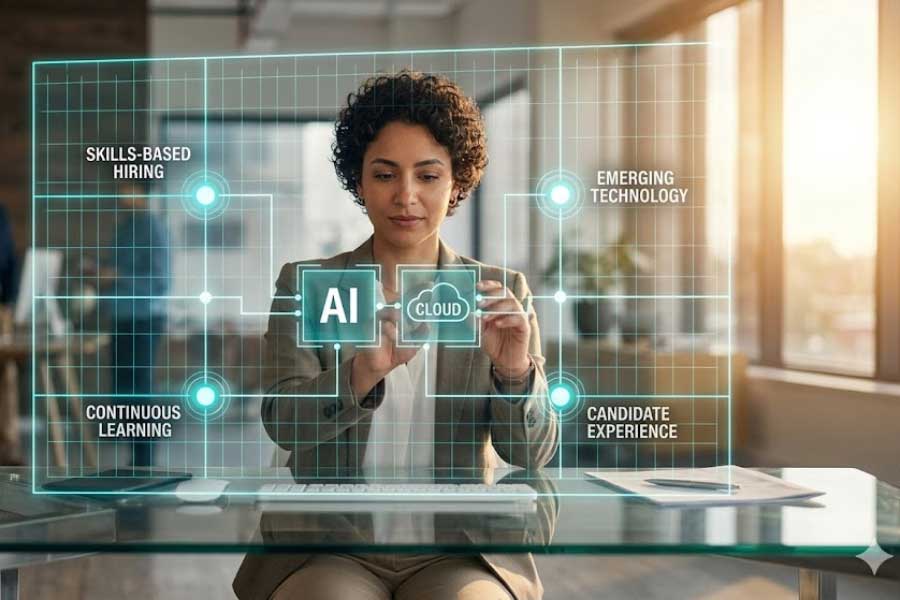
The Evolution of IT Infrastructure in 2026

The biggest IT infrastructure trends in 2026 are hybrid and multi-cloud environments, AI-native infrastructure, consumption-based cloud investment, embedded security, and intelligent automation. Together, they are turning infrastructure from a behind-the-scenes support function into a strategic priority.
In 2026, agencies aren’t simply maintaining infrastructure. They’re actively transforming it to meet the demands of artificial intelligence, cybersecurity, and an increasingly distributed workforce. The definition of IT infrastructure keeps expanding, too. What once meant servers and networks now includes cloud ecosystems, automation, and AI-driven operations. Here’s how IT infrastructure is evolving and what these trends mean for federal agencies.
IT Infrastructure Trends: From Support Function to Strategic Priority
Historically, IT infrastructure operated behind the scenes: reliable, but rarely top-of-mind. Today, infrastructure decisions directly affect mission continuity, the services agencies deliver to the public, and their ability to modernize.
High-profile cloud outages, rising cyber threats, and the rapid adoption of AI have pushed infrastructure into the spotlight. Agencies now recognize that outdated systems are not only inefficient, they are also a liability. Modern IT infrastructure must be resilient, scalable, and intelligent by design.
Trend 1: Hybrid and Multi-Cloud Become the Default
One of the most defining IT infrastructure trends of 2026 is the dominance of hybrid environments. Organizations are no longer choosing between cloud and on-premises systems. Instead, they are integrating both.
In fact, 88% of organizations now operate in hybrid IT environments, combining public cloud, private cloud, and on-premises infrastructure.
This approach offers several advantages:
- Greater flexibility and scalability
- Improved risk management
- Reduced vendor lock-in
- Better control over sensitive data
Multi-cloud strategies have also become the norm, letting agencies distribute workloads across providers while optimizing performance and cost. For federal agencies, cloud services typically go through FedRAMP authorization, which provides a standardized approach to security assessment for cloud products used across government.
Trend 2: AI Is Reshaping Infrastructure at Its Core
Artificial intelligence is fundamentally changing how IT infrastructure is built and managed.
Modern environments are increasingly “AI-native,” meaning infrastructure is designed to support machine learning, automation, and real-time data processing from the ground up. This shift brings its own challenges. AI workloads demand significant computing power, energy, and storage, so agencies must rethink capacity planning, data architecture, and cost management to keep up. For a closer look at how agencies are putting AI to work, see how federal agencies are using data solutions and AI to modernize operations.
Trend 3: Cloud Investment Shifts to a Consumption Model
Cloud computing continues to dominate IT spending and strategy. Infrastructure is becoming more dynamic and consumption-based: agencies pay for capacity as they use it, rather than buying and maintaining hardware up front. That shift puts a premium on:
- On-demand scalability
- Shorter deployment cycles
- Accessibility for distributed teams
- Cost visibility and control
With this growth comes complexity. Managing multi-cloud environments, controlling costs, and maintaining compliance require more sophisticated tools and expertise than ever before.
Trend 4: Security Becomes Embedded, Not Added
In 2026, security is a foundation, not a layer added at the end.
As infrastructure becomes more distributed, traditional perimeter-based security models are no longer effective. Agencies are adopting Zero Trust architectures, where every user, device, and request must be continuously verified. At the same time, cybersecurity spending continues to rise, reflecting the increasing sophistication of threats and regulatory requirements.
The takeaway is that infrastructure and security can no longer be treated as separate functions.
Trend 5: Automation and Intelligent Operations
Automation is redefining how IT infrastructure is managed. Routine tasks such as provisioning, monitoring, and scaling are increasingly handled by intelligent systems.
This shift allows IT teams to focus on higher-value initiatives, such as modernization and strategic planning, rather than manual maintenance. Infrastructure as Code (IaC), AI-driven monitoring, and predictive analytics are no longer emerging trends. They are standard practice in forward-thinking organizations.
What These IT Infrastructure Trends Mean for Federal Agencies
The evolution of IT infrastructure in 2026 signals a broader shift: technology is no longer just supporting the mission, it is central to delivering it.
Agencies that invest in modern, flexible infrastructure are better positioned to:
- Scale efficiently as priorities change
- Adapt to new mandates and mission needs
- Take advantage of emerging technologies
- Maintain strong security and compliance
Not sure where your current environment stands? Our side-by-side comparison of traditional vs modern IT infrastructure breaks down how the two models differ and when each one fits.
Frequently Asked Questions
What are the top IT infrastructure trends in 2026?
The leading trends are hybrid and multi-cloud environments, AI-native infrastructure, consumption-based cloud spending, embedded security such as Zero Trust, and automation through tools like Infrastructure as Code.
What does “AI-native” infrastructure mean?
AI-native infrastructure is designed from the ground up to support machine learning, automation, and real-time data processing, rather than adding AI capabilities to systems built for other purposes.
Why is IT infrastructure now a strategic priority?
Infrastructure decisions now directly affect security, mission continuity, and an agency’s ability to modernize. Outdated systems create risk as well as inefficiency.
Stay Ahead of IT Infrastructure Trends With Gridiron IT
Keeping pace with these trends takes the right technical knowledge and the right people. IT Infrastructure is one of Gridiron IT’s core practice areas, and we connect federal agencies with skilled IT professionals who understand today’s infrastructure challenges, from cloud architecture and cybersecurity to AI-driven systems and automation.
Looking to strengthen your IT infrastructure or build a future-ready team? Reach out to Gridiron IT to find the talent that will help your agency adapt, scale, and succeed.